Every few months, a sensational headline declares the imminent extinction of the software engineer. Social media timelines flood with screen recordings of prompt-driven tools scaffolding complete web applications in ninety seconds, accompanied by ominous commentary warning junior programmers to reconsider their careers.
The underlying anxiety is understandable. When a machine can instantly draft an authentication controller, generate relational database schemas, or translate complex regular expressions, the instinctive fear is that the human behind the keyboard is becoming redundant.
Yet, experienced engineering leaders recognize a very different reality taking shape on the ground.
The existential risk facing software professionals is not that an artificial intelligence model will make human engineers obsolete. The genuine, career-defining shift is far more pragmatic: software developers who master AI-assisted development are dramatically outperforming, out-iterating, and out-delivering those who refuse to use it.
AI is not removing the engineer from the equation. It is radically shifting what makes an engineer valuable.

1. AI Has Changed the Definition of “Good Developer”
For decades, the software industry measured proficiency primarily by syntactic recall and manual output volume. A "strong programmer" was someone who memorized complex language standard libraries, wrote clean boilerplate by hand, authored tedious CRUD endpoints with minimal reference checks, and spent entire afternoons crafting repetitive mock data suites.
Those activities consumed up to sixty percent of a typical engineering sprint:
- Writing repetitive boilerplate and data transfer objects (DTOs)
- Drafting and formatting internal API documentation
- Hunting through obscure stack traces for missing null-checks
- Translating data serialization schemas between formats
- Hand-crafting tabular mock payloads for unit suites
In modern AI software development, treating syntactic fluency as the pinnacle of engineering talent is an anachronism. High-performance AI coding assistants can synthesize boilerplate, generate unit-test scaffolds, and draft interface documentation in seconds.
Consequently, typing speed and syntax memorization have ceased to be competitive advantages. The definition of engineering excellence has shifted upstream: toward systems design, conceptual modeling, domain understanding, and technical discernment.
2. AI Is a Tool, Not an Engineer
To understand why autonomous software generation cannot operate unguided, one must distinguish between writing code and engineering systems. Code is merely the artifact; engineering is the process of navigating trade-offs under constraints.
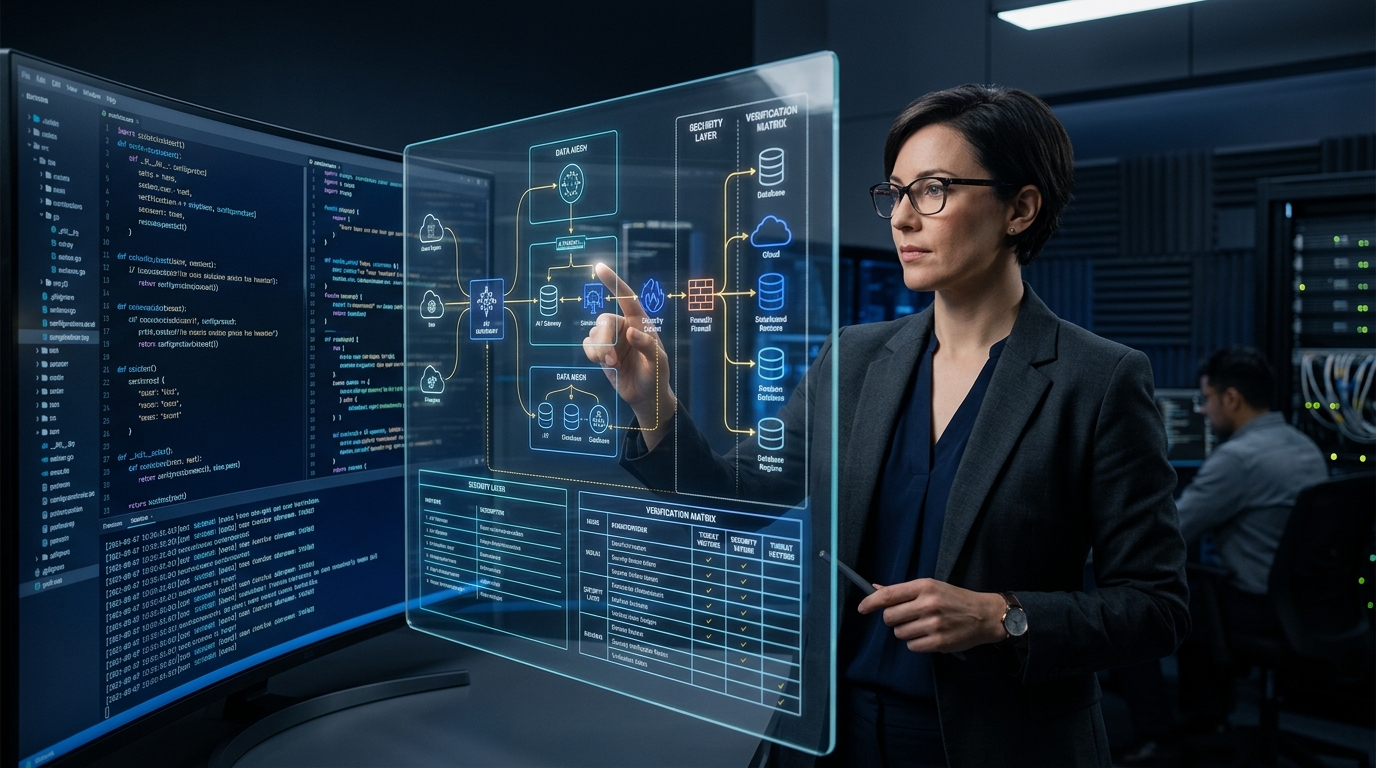
Large Language Models synthesize patterns based on probabilistic token distributions from historical code repositories. They excel at predicting what code commonly looks like, but they possess zero innate grasp of:
- Nuanced Business Requirements: AI cannot interview an operations lead, identify unstated operational bottlenecks, or discern that a client’s requested feature contradicts their regulatory licensing requirements.
- Holistic System Architecture: An AI assistant can draft an endpoint to query PostgreSQL, but it cannot evaluate whether high write throughput on that table will cause lock contention with an existing event-sourcing pipeline.
- Security Boundaries: Models frequently suggest syntactically clean patterns that inadvertently bypass tenant authorization boundaries, expose internal database identifiers, or omit crucial replay attack protections.
- Production Accountability: When an unexpected network partition triggers cascading connection timeouts at two in the morning, an algorithm does not join the incident bridge, triage customer impact, or explain root causes to executive leadership.
An algorithm can generate code. Only an engineer can take responsibility for a production system.
3. The Widening Productivity Divide: Developer A vs. Developer B
The difference between rejecting modern tools and embracing them is best illustrated by looking at two engineers tackling the same enterprise feature: implementing an asynchronous reporting export service with rate-limiting, tenant scoping, and cloud storage integration.
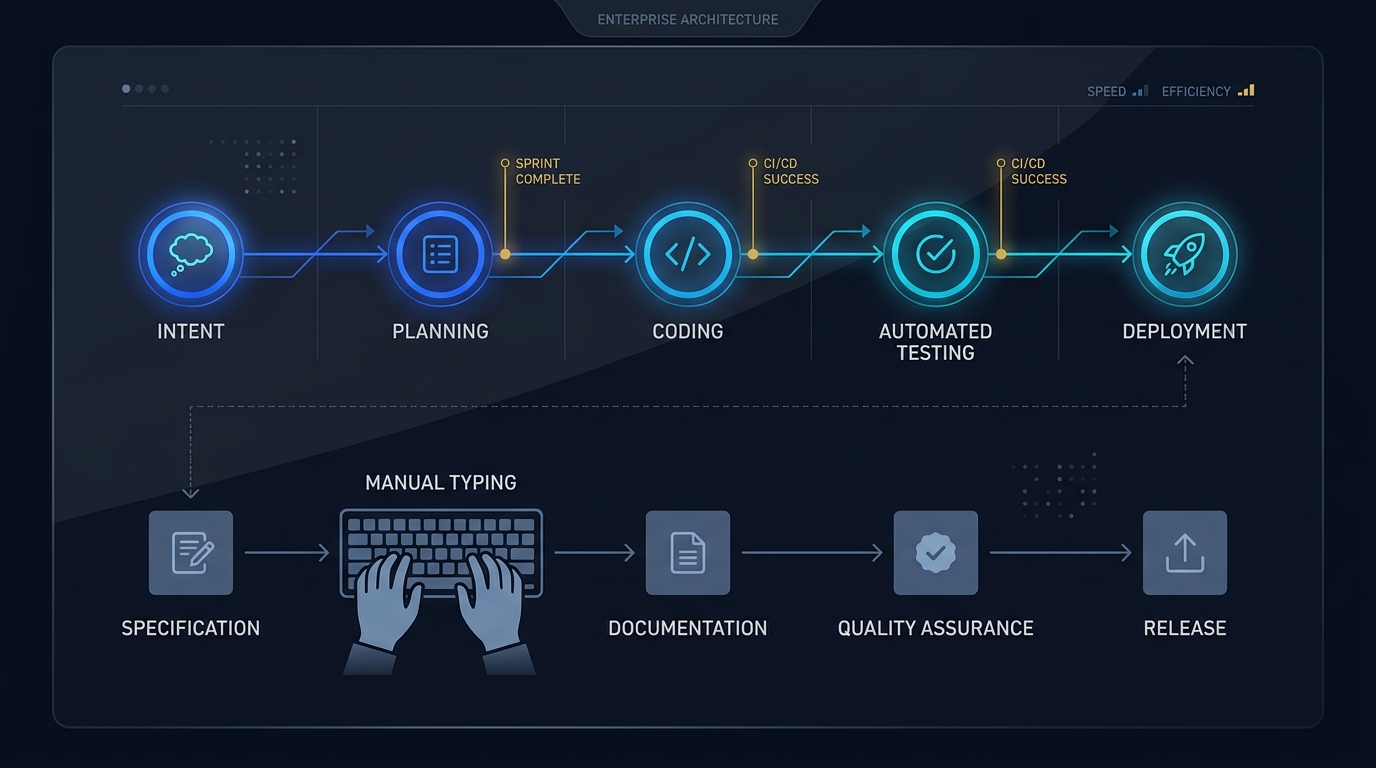
Developer A: The Traditionalist
- Spends half a day hand-typing repetitive queue worker boilerplate, serialization structs, and database migration files.
- Writes forty manual unit tests testing happy-path field mappings, checking standard edge cases one by one.
- Manually searches through framework documentation and Stack Overflow threads to find the syntax for a specific S3 multipart upload hook.
- Total Time to PR: 3.5 days.
- Cognitive Exhaustion: High, spent mostly on syntax and boilerplate typing.
Developer B: The AI-Augmented Engineer
- Scaffolds the queue workers, DTOs, and migration structures using an AI assistant in thirty minutes, providing explicit instructions on company naming conventions and architectural layers.
- Uses prompt-driven generation to synthesize ninety comprehensive test cases—including malformed payload boundaries, simulated network dropouts, and empty tenant contexts.
- Uses the saved bandwidth to focus deeply on critical architectural questions: Will this background job exhaust database connection pools during peak morning traffic? Should exports be cached at the edge or partitioned by billing tier?
- Scrutinizes every line of generated code, catching a missing tenant filter that the AI failed to apply to the background query.
- Total Time to PR: 1.5 days.
- Result: Faster delivery, higher architectural resilience, and comprehensive test coverage.
Developer B is not taking shortcuts; Developer B is using AI developer tools to eliminate mechanical friction, freeing up intellectual bandwidth for deep architectural verification.
4. Why AI-Generated Code Requires More Skepticism, Not Less
The most dangerous assumption an engineering team can make is equating "syntactically perfect" with "production-ready."
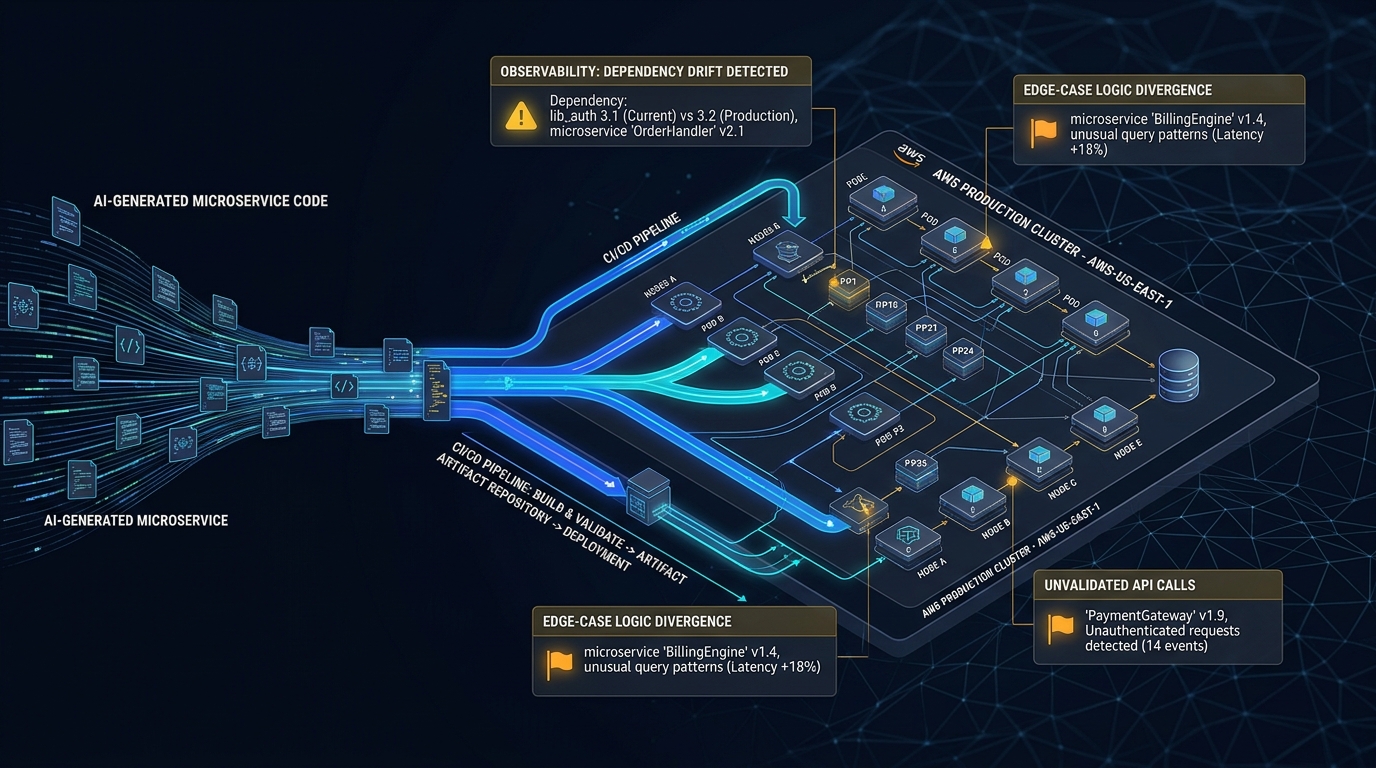
Unsupervised AI-generated code creates subtle, latent failure modes that standard unit tests frequently overlook:
1. Hallucinated APIs and Silent Library Drift
Models frequently generate calls to plausible-sounding methods that do not exist, or reference deprecated versions of third-party libraries that contain known CVE vulnerabilities. Without strict dependency verification, teams introduce supply-chain risks directly into build artifacts.
2. Contextual Security Blind Spots
While an AI will effortlessly implement authentication token checks, it almost never understands relational multi-tenancy rules. It will construct an endpoint that fetches orders by ID without validating whether the requesting customer owns that organization record—introducing critical Insecure Direct Object Reference (IDOR) vulnerabilities.
3. Demo Traps vs. Distributed Realities
Code produced by conversational prompts often looks flawless in local test runs with twenty mock records. But in distributed cloud clusters handling ten thousand requests per second, missing connection timeouts, unindexed join conditions, and unhandled deadlocks will quickly bring down production clusters.
High engineering standards are not lowered by AI; they become the single defense preventing AI-accelerated code from turning into enterprise-scale technical debt.
5. The Emerging Superpower: The Developer as Editor-in-Chief
In an era of AI in software engineering, the developer’s primary daily discipline shifts from pure authorship to rigorous technical editing.
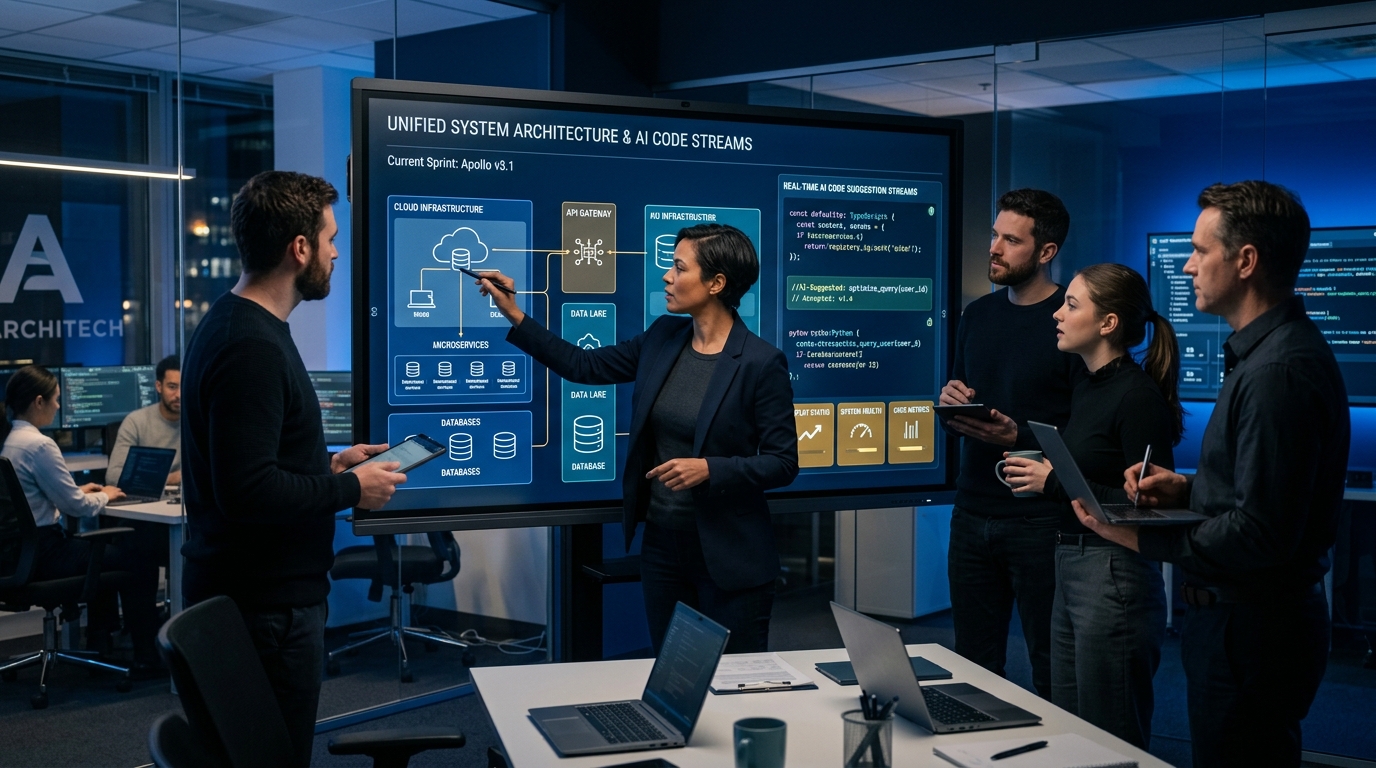
The developers who command the highest value in 2026 are those who excel at:
- Context Formulation: Articulating business rules, domain boundaries, and technical constraints so clearly that the AI produces targeted, idiomatic solutions on the first pass.
- Defensive Code Review: Possessing the depth of experience required to spot race conditions, memory leaks, and missing authorization checks hidden within clean-looking syntax.
- Hypothesis & Edge-Case Testing: Knowing which questions the AI failed to ask: What happens during an unexpected failover? How does this behave if the payment webhook fires out of order?
- Architectural Cohesion: Ensuring that generated modules fit neatly into the organization’s domain boundaries, database patterns, and observability conventions rather than creating isolated spaghetti implementations.
6. How Forward-Thinking Companies Structure AI Coding Policies
Enterprises that prohibit AI outright find their engineering teams either quietly circumventing restrictions or falling behind competitors. Conversely, organizations with zero guardrails risk intellectual property exposure and security incidents.
A balanced, responsible AI development policy incorporates six operational pillars:
| Policy Dimension | Unsafe / Naive Approach | Enterprise-Grade Standard |
|---|---|---|
| Tool Selection | Allowing developers to use arbitrary consumer AI web interfaces. | Mandating enterprise-tier tools with contractual guarantees of zero data training on proprietary source code. |
| Code Ownership | Treating AI as a co-author with shared blame when bugs arise. | Absolute human accountability: the engineer who merges the PR owns 100% of the runtime behavior. |
| Verification Gates | Relying solely on manual peer review to catch hallucinations. | Enforcing automated SAST scans, dependency allow-lists, and mandatory CI pipeline test thresholds. |
| Confidential Data | Pasting raw customer databases or production logs into chat tools. | Strict filtering preventing any PII, credentials, or proprietary encryption keys from entering prompt streams. |
| Performance Metrics | Rewarding developers based on raw lines of code or PR velocity. | Measuring production stability, architecture quality, and business outcome metrics. |
| Production Rollouts | Deploying AI-accelerated modules directly to all users. | Staged canary deployments with automated telemetry anomaly detection and instant rollback mechanisms. |
7. The Four Pillars of the Modern Software Engineer
What does the profile of an elite developer look like in an AI-augmented industry? It is no longer just deep specialization in a single programming language syntax. It is a synthesis of four interconnected capabilities:
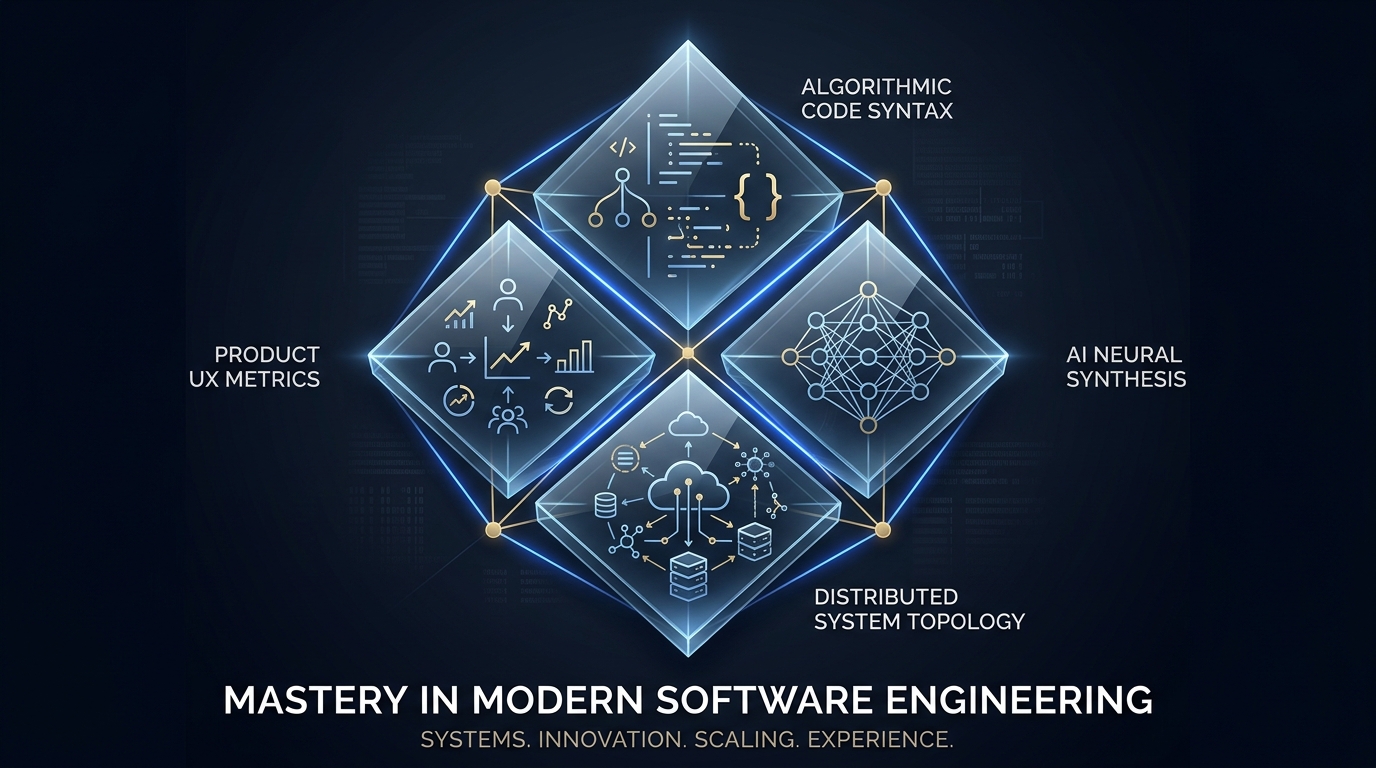
- Foundational Programming Fluency: Deep fluency in algorithms, memory management, protocol mechanics, and concurrency models. Without this foundation, an engineer cannot tell when generated code is subtly wrong.
- AI & Prompt Literacy: The ability to decompose complex engineering challenges into modular, contextual prompt sequences that yield precise, reliable components.
- Systems & Architectural Thinking: Designing resilient distributed topologies, establishing domain boundaries, and ensuring fault-tolerant data pipelines that survive regional outages.
- Product & Domain Intuition: Deeply understanding the human user, the business workflow, and the operational trade-offs that make software economically viable.
Engineers who possess all four pillars do not fear automation; they harness it to build systems that previously required an entire department.
8. Conclusion: The Future Belongs to the Augmented Engineer
Software engineering is not ending. It is maturing.
Just as the transition from assembly language to high-level compilers did not eliminate programmers—it simply allowed them to build operating systems, relational databases, and the worldwide web—AI coding is abstracting away mechanical boilerplate so humans can solve higher-order problems.

The future does not belong to artificial intelligence operating in a vacuum, nor does it belong to developers who stubbornly refuse to modernise their workflow.
The future belongs to the disciplined, discerning engineer who uses AI as an intellectual amplifier—writing code faster, testing deeper, and taking unwavering responsibility for building reliable, secure, and resilient technology.
Frequently Asked Questions (FAQ)
Will AI replace junior software developers?
AI will not eliminate junior developers, but it is dramatically changing the entry-level expectations. Junior engineers who only know how to write basic syntax will face intense competition. However, junior developers who combine programming fundamentals with strong AI literacy, curiosity, and code-review habits will ramp up to mid-level engineering velocity much faster than previous generations.
Does using AI coding tools make developers worse at programming?
If relied upon passively as a "black box," yes—developers risk losing foundational comprehension. However, when used deliberately as an interactive pair-programming partner to explain obscure patterns, suggest alternative algorithms, and generate complex test suites, AI can dramatically accelerate an engineer’s learning curve and technical depth.
What is the biggest security risk of AI in software engineering?
The greatest security danger is automation bias: developers assuming that beautifully indented, syntactically clean code is inherently secure. AI tools frequently omit tenancy checks, reproduce legacy vulnerabilities from public training data, and hallucinate external dependencies that attackers can weaponize.
How should companies measure developer productivity in the AI era?
Never evaluate engineers by lines of code or pull request volume, as AI makes generating raw code trivial. Instead, measure business impact, system reliability, mean time to recovery (MTTR), customer-reported defect rates, and the architectural maintainability of delivered systems.
Can AI design distributed software architecture?
AI can explain established architectural patterns (such as event sourcing, CQRS, or modular monoliths) and suggest high-level components. However, it cannot evaluate organizational communication structures, unique latency budgets, financial infrastructure trade-offs, or regulatory compliance constraints that dictate enterprise architectural decisions.
Recommended Authoritative References & Citations
- ACM (Association for Computing Machinery) – Evaluating LLMs for Code Generation:
Empirical research evaluating the correctness, maintainability, and semantic reliability of code generated by large language models.
Reference: ACM Digital Library. - GitHub Octoverse & Developer Productivity Research:
Benchmark studies analyzing developer throughput, cognitive load reduction, and code-review patterns when using AI coding assistants.
Reference: GitHub Research & Octoverse Annual Report. - OWASP Top 10 for Large Language Model Applications:
Industry standard guidance outlining security risks in generative AI adoption, with emphasis on Supply Chain Vulnerabilities (LLM05) and Insecure Output Handling (LLM02).
Reference: Open Worldwide Application Security Project (OWASP). - CISA – Shifting the Balance of Cybersecurity Risk (Secure by Design):
Federal standards requiring technology providers and engineering teams to prioritize security, code verification, and human accountability from inception.
Reference: Cybersecurity and Infrastructure Security Agency. - Martin Fowler – Software Architecture and Refactoring Guidelines:
Foundational literature on technical debt, domain boundaries, and why maintainability and comprehension surpass raw typing velocity in software engineering.
Reference: Thoughtworks / martinfowler.com.
Building Reliable Software in the AI Era?
AI can accelerate software development. But reliable software still requires engineering judgment. Jemixo Technologies helps businesses turn ideas into scalable, secure, and production-ready technology.
Explore our Enterprise Software Engineering Services, discover our AI & Autonomous Agent Solutions, or Talk to Our Engineering Team.